
The webinar discusses the importance of performance analysis tools and methodologies to support the exploration of the behaviour of parallel programs in a very wide dynamic range of scales.
The presentation is based on examples using Paraver and the POP metrics and methodologies analyzing large scale parallel programs but also other experiences of analyses of AI training workloads and from other projects aiming at RISC-V vector processor design.
 |
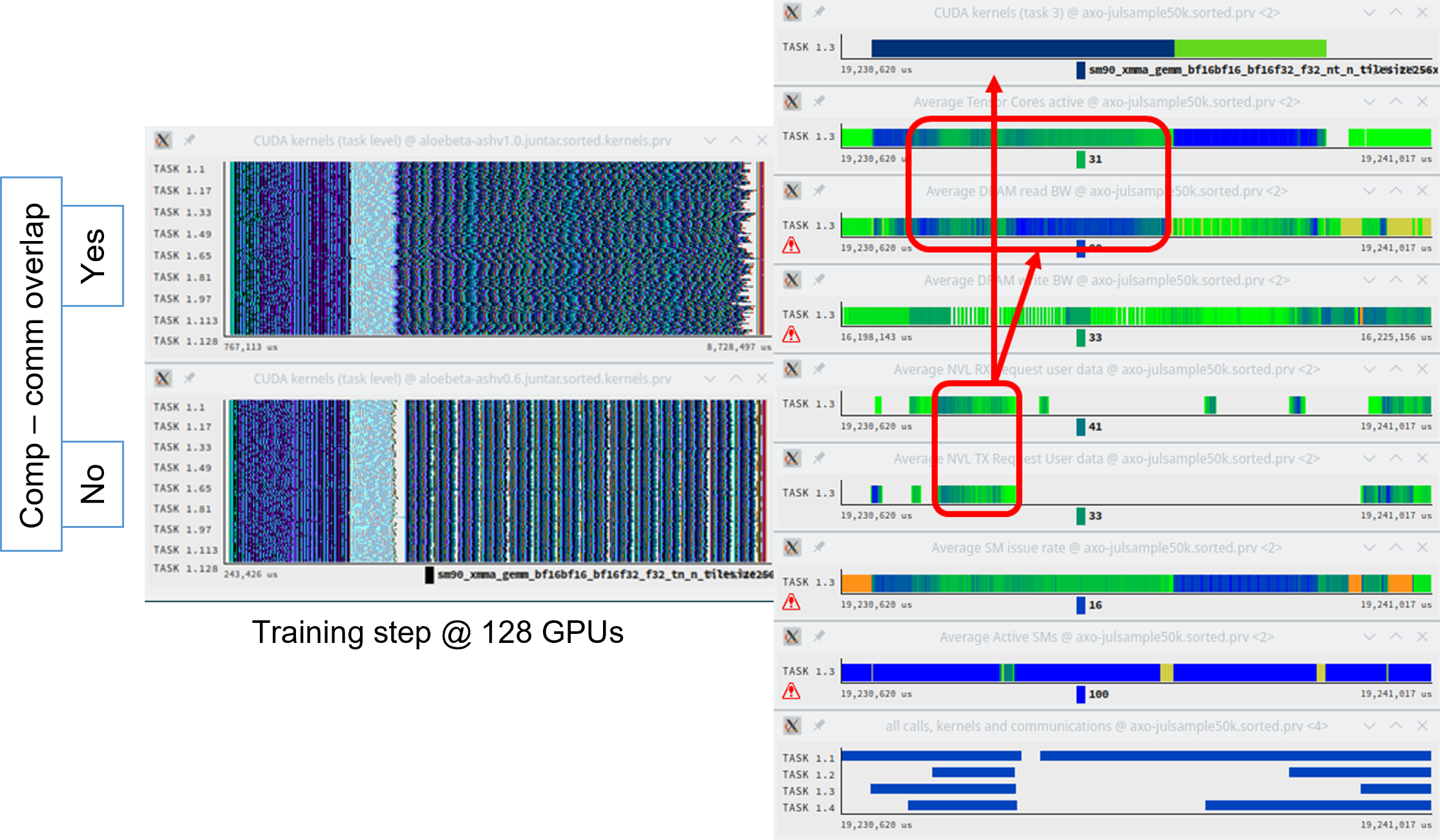 |
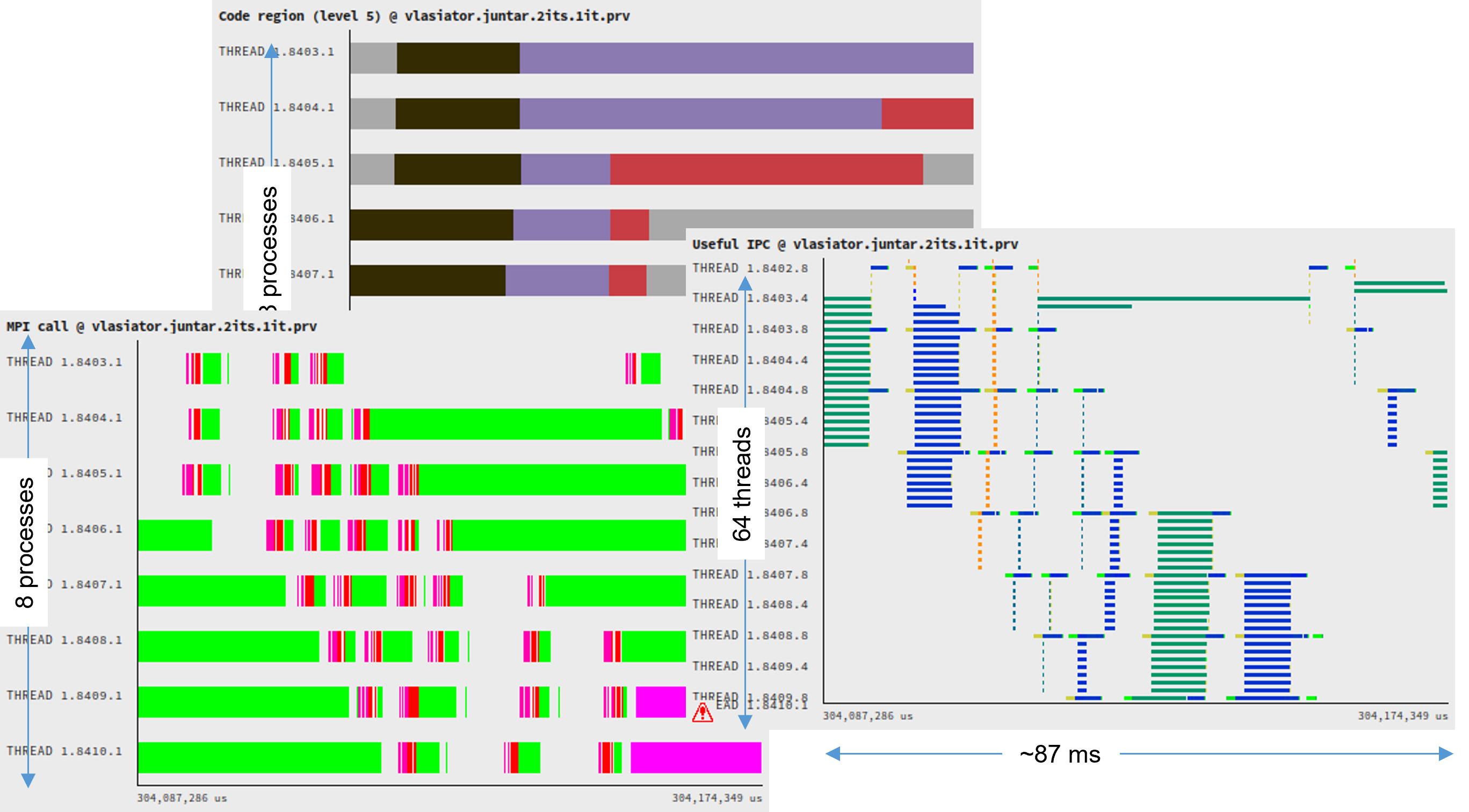
The fundamental message advocated for is that performance tools need not only to capture a large amount of data, but also to let users sweep how they navigate them from macroscopic (aggregated) to microscopic (detailed) scales depending on which direction the analysis takes them. This should allow users to minimize the number of measurement experiments needed while maximizing the insight they can squeeze out of them.
Reference Material
About the Presenter
 Prof. Jesús Labarta received his Ph.D. in Telecommunications Engineering from UPC in 1983, where he has been a full professor of Computer Architecture since 1990. He was Director of European Center of Parallelism at Barcelona from 1996 to the creation of BSC in 2005, where he is the Director of the Computer Sciences Dept. His research team has developed performance analysis and prediction tools and pioneering research on how to increase the intelligence embedded in these performance tools. He has also led the development of OmpSs and influenced the task based extension in the OpenMP standard. He has led the BSC cooperation with many IT companies. He is now responsible for the POP center of excellence, providing performance assessments to parallel code developers throughout the EU, and leads the RISC-V vector accelerator within the EPI project. He has pioneered the use of Artificial Intelligence in performance tools and will promote their use in POP, as well as the AI-centric co-designing of architectures and runtime systems. He was awarded the 2017 Ken Kennedy Award for his seminal contributions to programming models and performance analysis tools for high performance computing, being the first non-US researcher to receive it.